Hello! I am Piklu, and this is my garden. Mira and Kabir are coming for a walk with me. There are five corners to visit, and in every one a game is waiting. Play it, and the flowers bloom: on we go to the next stone! Where shall we go first?
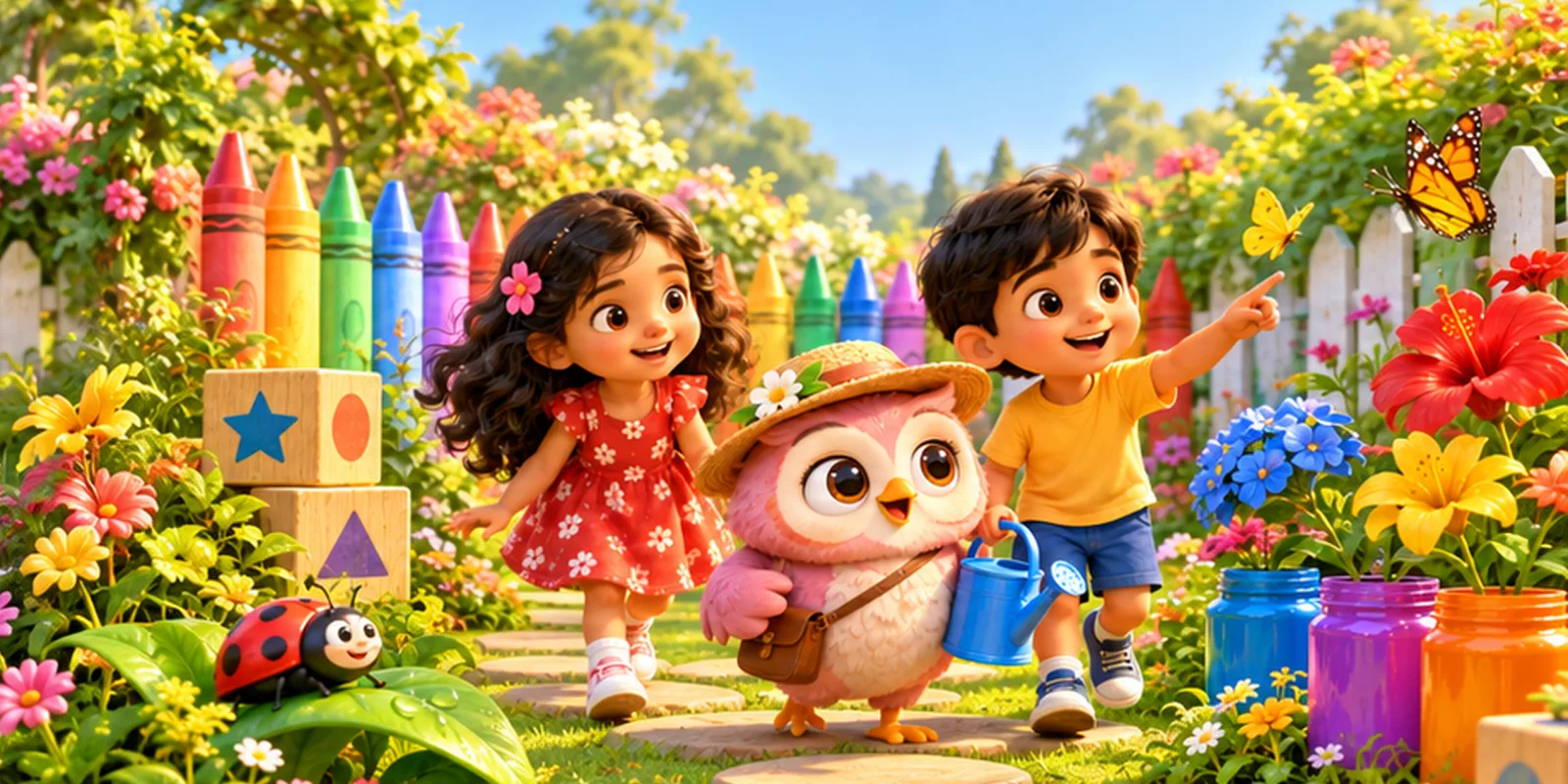
Kindergarten learning pathCome for a walk in Piklu's garden!
For grown-ups For a child in Nursery, LKG or UKG, about three to five years old. Instead of picking any game at random, your child follows five short paths, one step at a time. Each step is a free game at a set level: tap it and the game opens at that level. At this age, sit beside your child and read Piklu's lines aloud.
A day in the garden: 10 minutes, three seed packets
Packet 1🌱
4 minutes
Letters or numbers
The next step on Letters and sounds one day, and on Counting and comparing the next.
Packet 2🌱
3 minutes
Looking and colours
The next step on Looking and remembering, Colours, shapes and patterns or The world around us, a different one each day.
Packet 3🌱
3 minutes
Free pick
Any game your child likes, at any level. Keep this part: it is what makes them want to come back tomorrow.
At this age, sit beside your child and play together: say the question out loud, point, and cheer. Most of these games can read the question aloud too. Stop while it is still fun, and a few minutes a day is plenty.
How is it growing? When to take the next step
- In bloom: walk on when most rounds earn ★★★, on two different days.
- Sprouting: stay while the stars are mixed. That is the right level: keep going.
- Needs water: go back a step when most rounds earn ★, or play stops being fun. The level was wrong, not your child.
The site saves nothing, so you keep track: print this page and tick each step, or note the step numbers on your phone. Each path can move at its own pace, and three-year-olds and five-year-olds will be at very different steps. A child who finishes a path can carry on in the Grade 1 learning path.
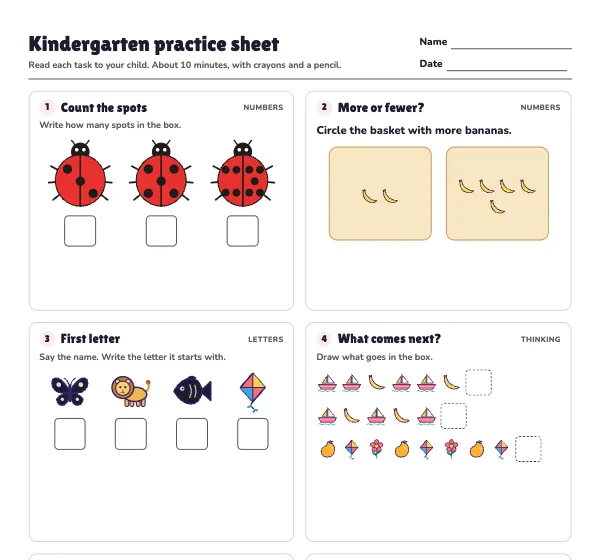
Print a practice sheet
A walk with no screen: one side of A4 to do with crayons and a pencil. Read each task out to your child: count a ladybird's spots, circle the basket with more, write the first letter of a picture, draw what comes next, colour in a mixed paint, and spot two changes. It takes about 10 minutes. The answers are printed upside down at the bottom, for you.
⬇️ Download the practice sheet (PDF)
Would you like more sheets like this? Tell us on WhatsApp.
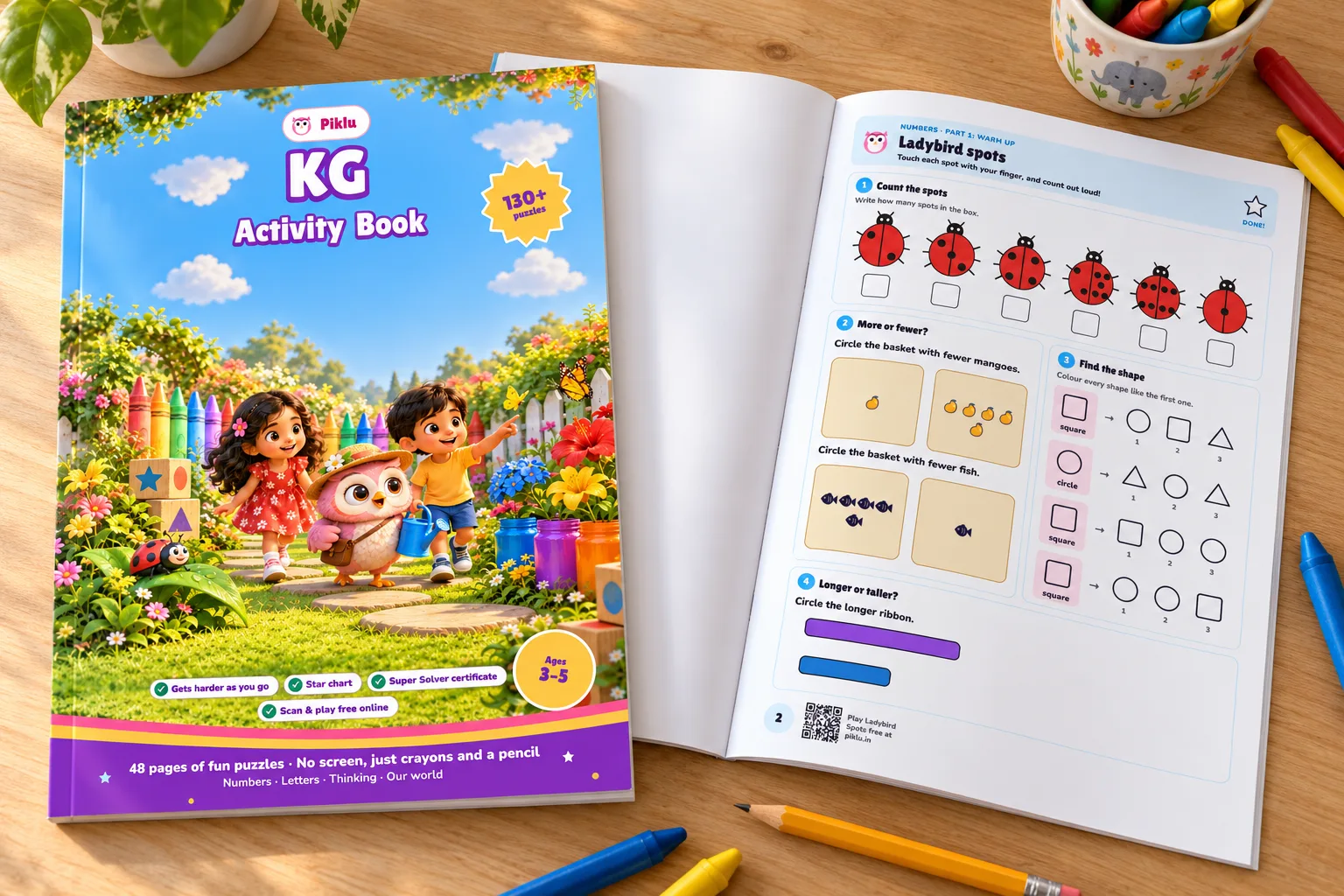
The KG activity book
The whole garden walk on paper, with Piklu's garden on the cover. Its puzzles come from the games on this path, at KG levels, in four parts that get harder: Warm up, Keep going, Getting stronger and Super stretch. One page a day takes about 10 minutes, with crayons, a pencil and you reading each task out, and the code on every page opens its game here.
- 48 pages
- Over 130 puzzles
- A star chart
- A certificate at the end
Would you like one? Ask on WhatsApp, and we will tell you the price and the delivery.
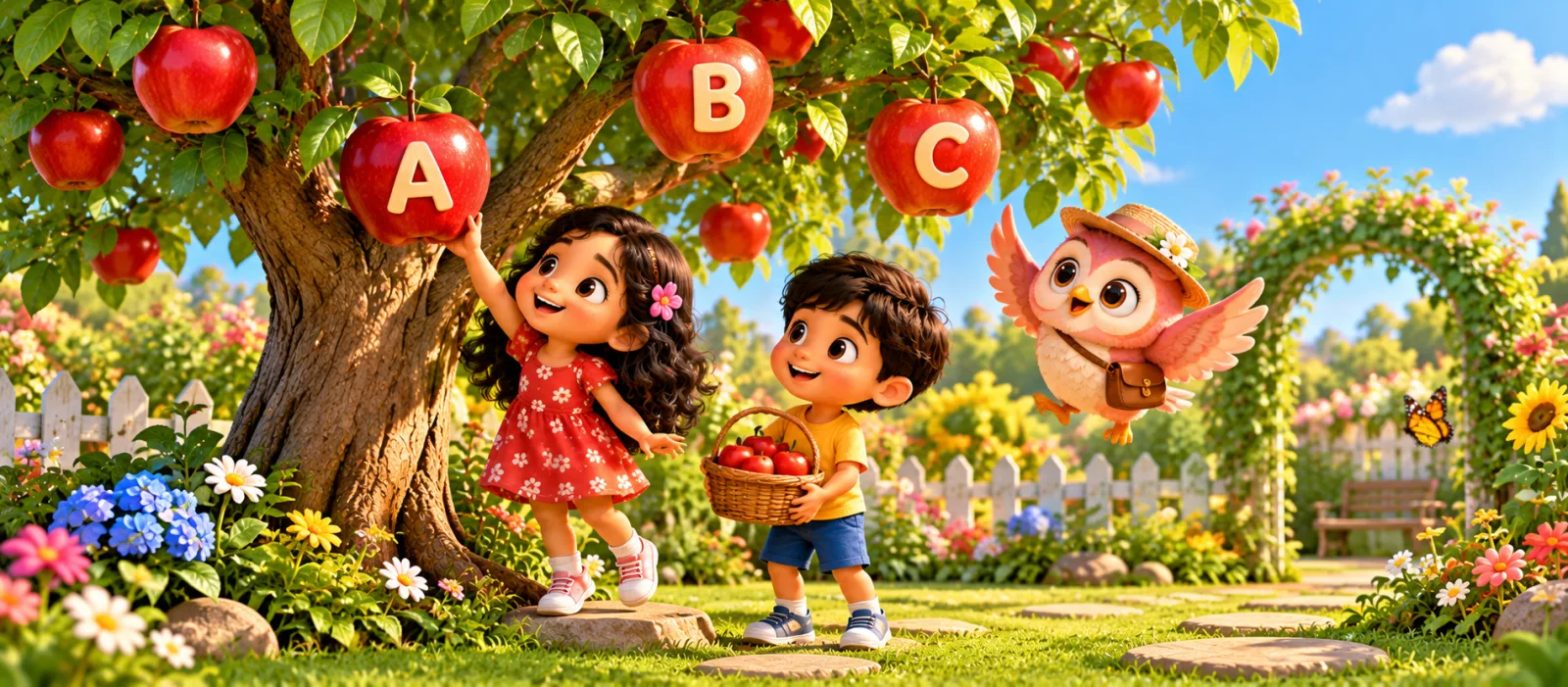
Corner 1 · This wayThe Apple Tree
Letters and sounds
Look up! Letters grow on this tree, like apples. Let's pick them one by one, and listen to the sounds they make.
Knowing the letters, and hearing the sounds inside words: the steps before reading.
- Rhyme Time Easy Listen to a word and find the picture that rhymes: cat and hat.
- First Letters Easy Find the same letter. Some look nearly alike, like B, D and P. Off screen: Find the first letter of your child's name on a sign or a packet.
- Rhyme Time Medium Rhymes, with pictures that start the same to trick you.
- First Letters Medium Every big letter has a small letter: big B, small b.
- Rhyme Time Hard Three words rhyme and one does not: find the odd one out.
- First Letters Hard Listen to a word and find the letter it starts with. A step into Grade 1.
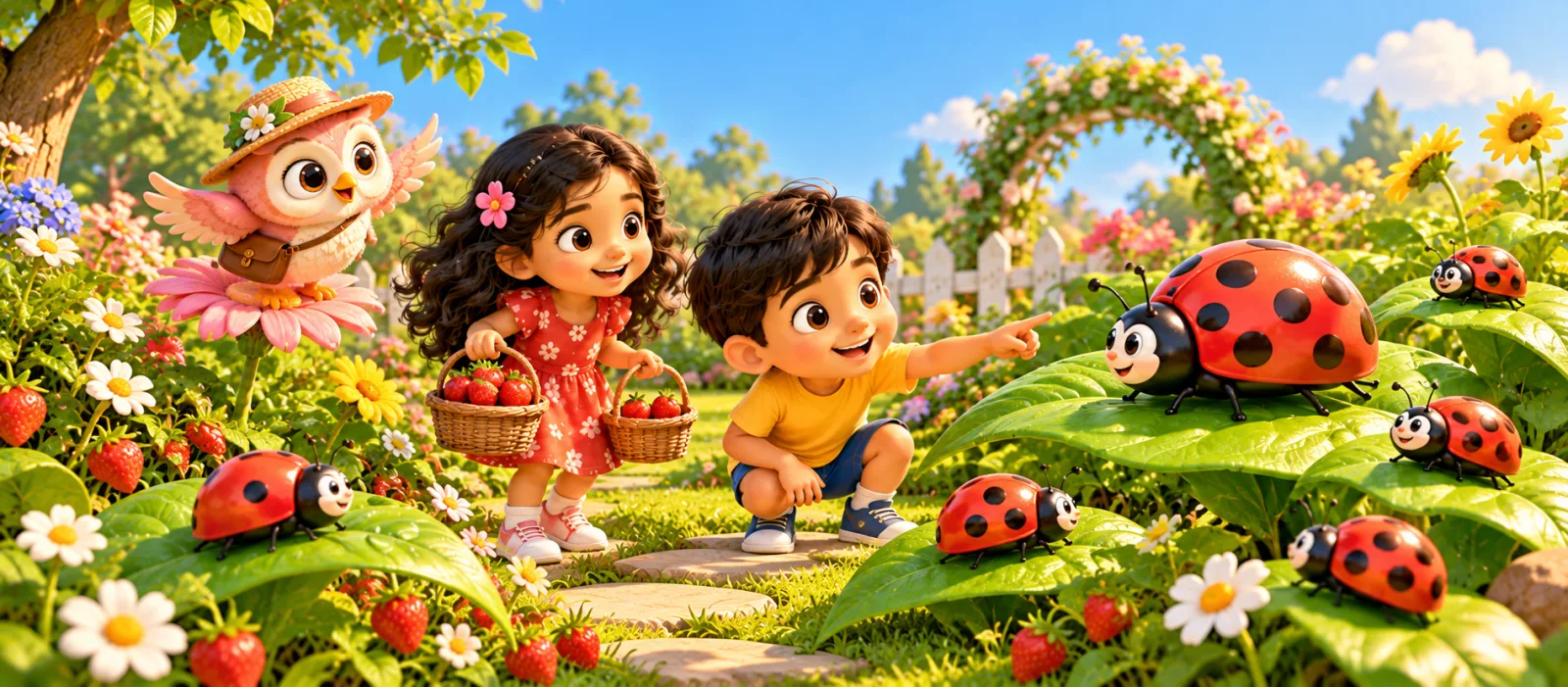
Corner 2 · This wayLadybird Meadow
Counting and comparing
Shh, the ladybirds are sunbathing. How many spots can you count? Which basket has more berries?
Counting, seeing small numbers at a glance, more and fewer, and longer and heavier.
- Ladybird Spots Easy Count up to 5 spots, or see them at once, like the dots on a dice.
- More or Fewer Easy Which basket has more? Which has fewer? Off screen: Share some grapes into two bowls. Which bowl has more?
- More or Fewer Medium Longer or shorter, taller, heavier on a seesaw, more juice in a glass.
- Ladybird Spots Medium Spots on both wings, up to 10: 3 and 4 make 7.
- More or Fewer Hard Up to 10, or the same. Spread out does not mean more!
- Ladybird Spots Hard How many spots are hiding under the leaf?
- More or Fewer Expert How many more? Match the two rows and count what is left over. A step into Grade 1.
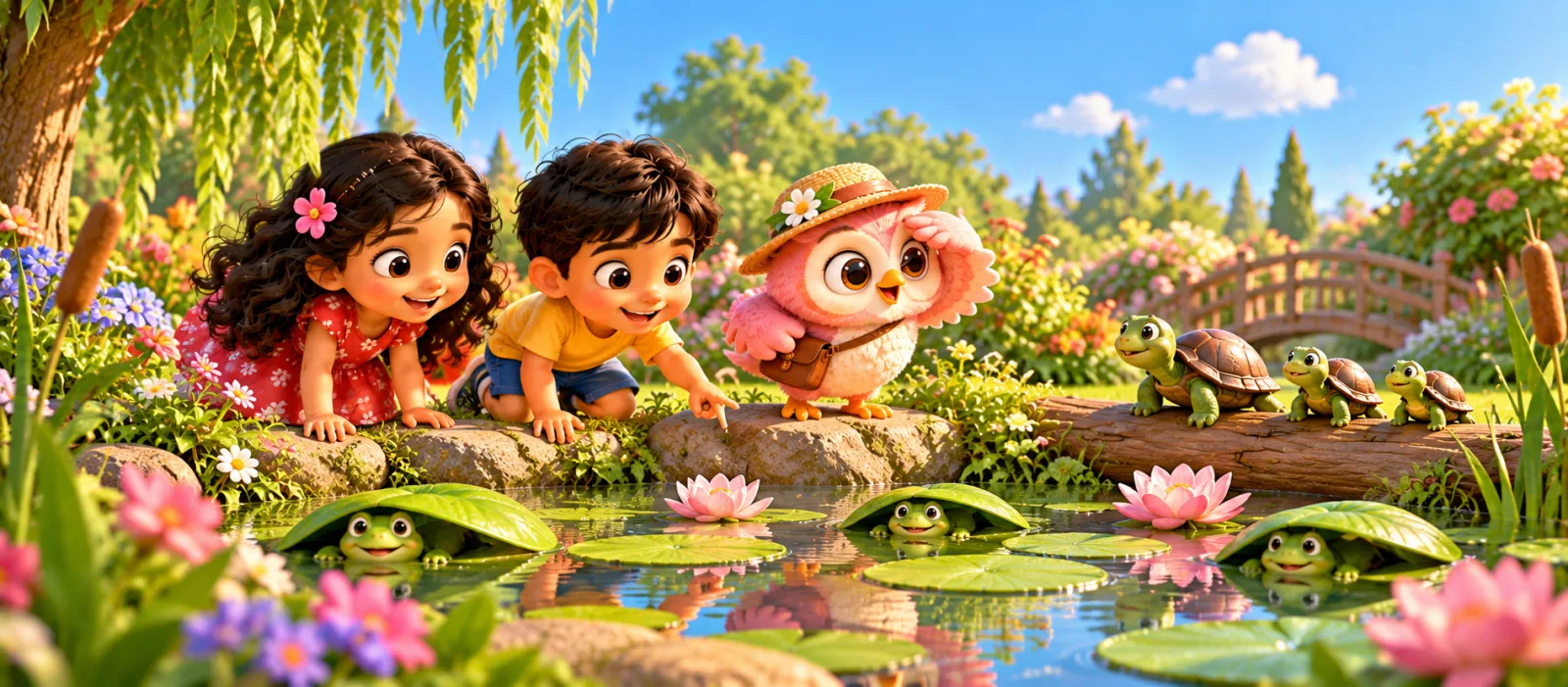
Corner 3 · This wayPeekaboo Pond
Looking and remembering
Frogs hide under the lily pads here. Look closely, and remember where each one was!
Looking closely, remembering where things are, and spotting what is different.
- Spot the Change Easy Two little pictures: one thing has changed. Can you find it?
- Snap Pairs Easy Six cards face down. Turn two at a time and find the pairs.
- Spot the Change Medium Two changes to find.
- Snap Pairs Medium Eight cards to remember.
- Spot the Change Hard Three changes in a bigger picture.
- Snap Pairs Hard Twelve cards. A step into Grade 1.
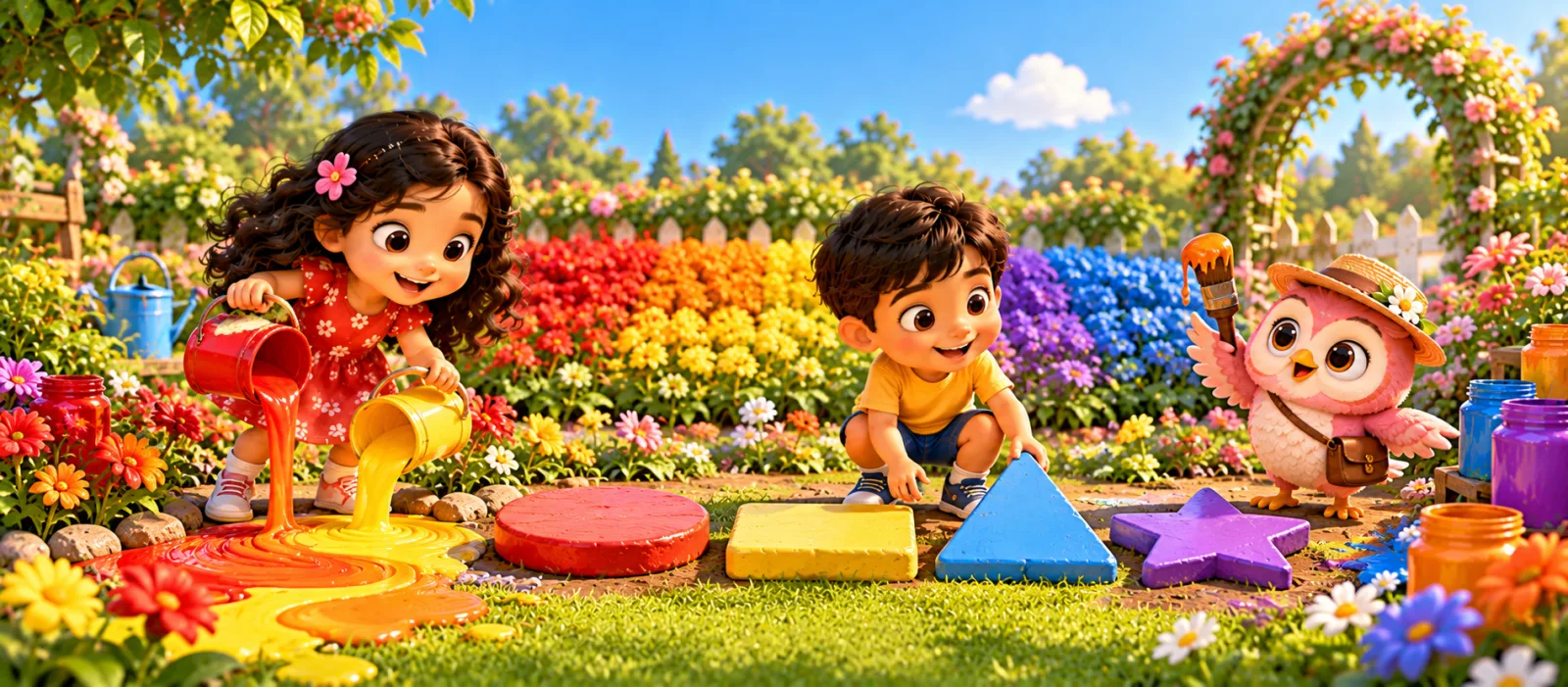
Corner 4 · This wayRainbow Flower Beds
Colours, shapes and patterns
Red, yellow, blue! Mix the paints, find the shapes, and plant the flowers in a pattern.
Naming colours and shapes, mixing paint, and finding the rule in a row.
- Color Match Easy Tap the colour that matches its name: four colours.
- Shape Sorter Easy A shape appears: find the one that matches it, out of three.
- What Comes Next Easy Colour patterns: red, blue, red, blue, what comes next? Off screen: Make a pattern with blocks or buttons, and take turns adding to it.
- Paint Pots Easy Red and yellow make orange: mix the colour the owl wants. Off screen: Mix two paints, or two crayons on paper, and see what you get.
- Color Match Medium Ten colours to tell apart.
- Shape Sorter Medium Five shapes, in every colour and size: look at the outline.
- Paint Pots Medium White makes a colour lighter: red and white make pink.
- What Comes Next Medium Patterns with counting in them.
- Shape Sorter Hard Find every matching shape, not just one.
- Paint Pots Hard One paint is in the bowl: which one makes the colour? A step into Grade 1.
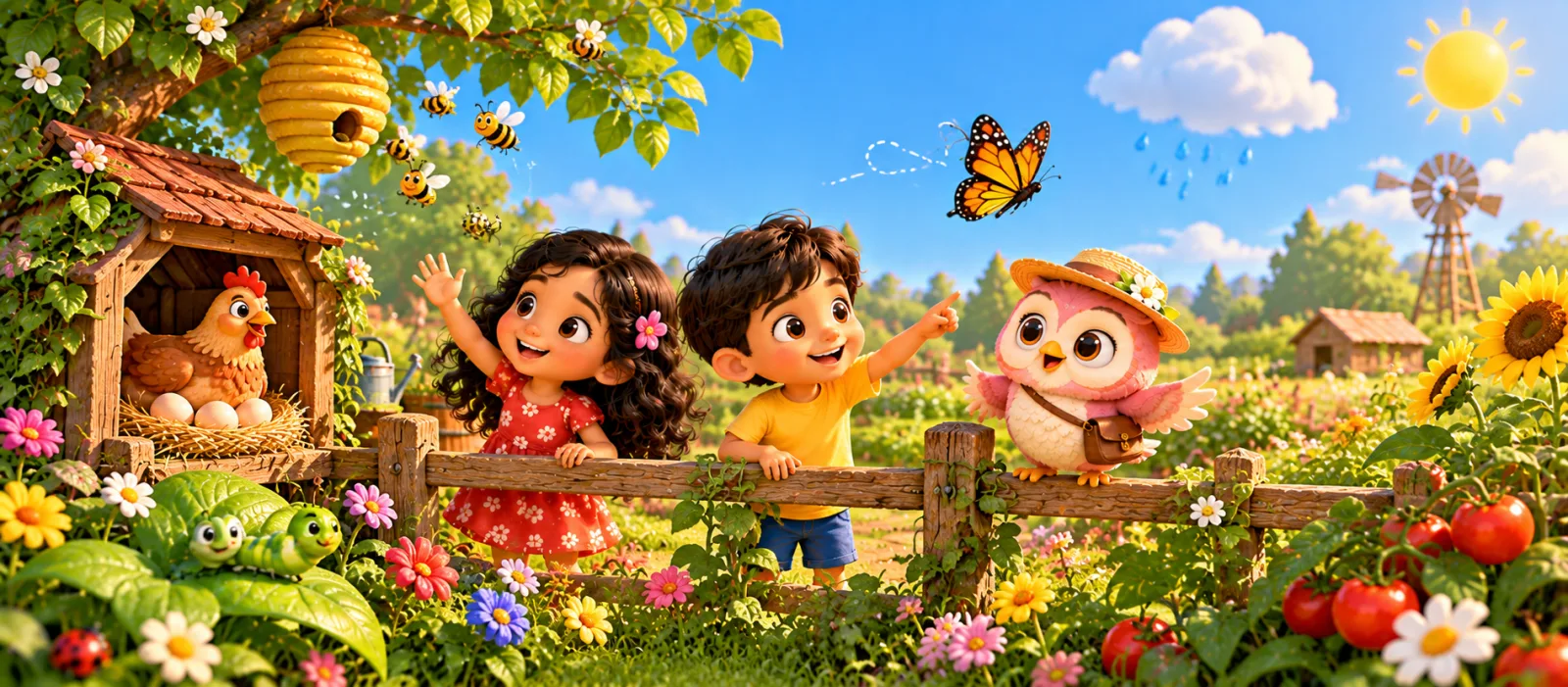
Corner 5 · This wayBusy Farm
The world around us
Who lives in the nest? What does a caterpillar grow into? Everyone at the farm has a story to tell.
Our senses, the weather, animal homes, helpers, and how living things grow.
- Who Goes Where Easy What do you smell a flower with? What do you need in the rain? Off screen: Close your eyes and guess a sound, a smell, a taste.
- Who Goes Where Medium Where does a fish live? What does a doctor use? Off screen: On a walk, spot a helper at work and talk about what they use.
- Who Goes Where Hard What does a caterpillar grow into? Who says moo? A step into Grade 1.
More games for this age
Every Piklu game that suits a child of three to five is on one of the paths above. When a path is finished, the Grade 1 learning path has the next steps.
If something is hard
- Switch on Read aloud. Most games here can read the question out, and First Letters and Who Goes Where have a 🔊 Hear it button. A child does not need to read to play.
- Go back a level. Winning is what keeps a young child trying.
- Hold the device together for the first rounds of a new step, and tap only when they point.
- Children this age grow at very different speeds. If something worries you, talk to your child's teacher or doctor.
What this path does not cover
Piklu does not have games for everything a young child learns, and we would rather say so:
- Holding a pencil, drawing and writing letters by hand.
- Talking, listening to stories and singing rhymes together.
- Running, climbing, building and playing with other children.
Nothing on this page is tied to one school or syllabus. It follows what most nurseries and kindergartens cover, and each step names exactly what it practises.
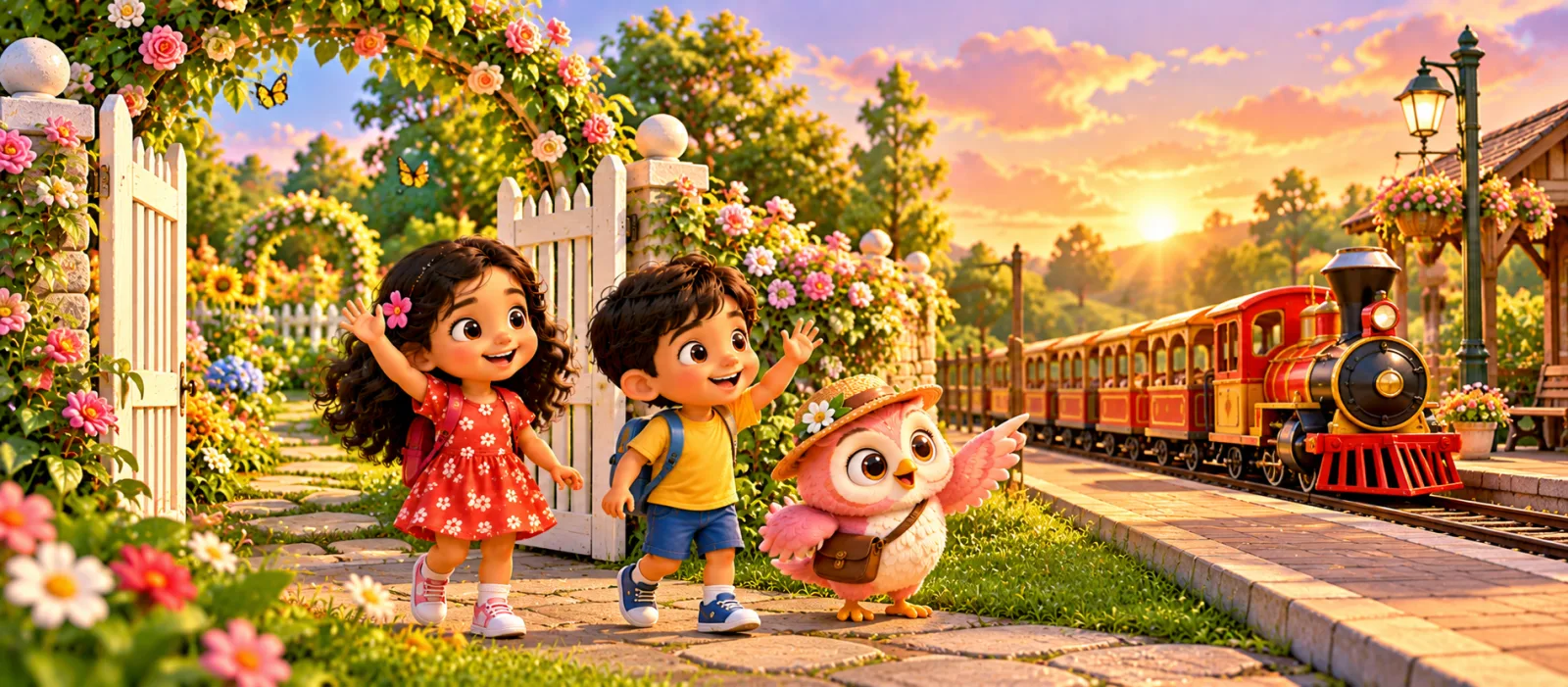
At the garden gate? The Grade 1 Express is waiting
When a path is done, the same kind of steps carry on in the Grade 1 learning path.